Morning routine for kids: a school-morning checklist that works
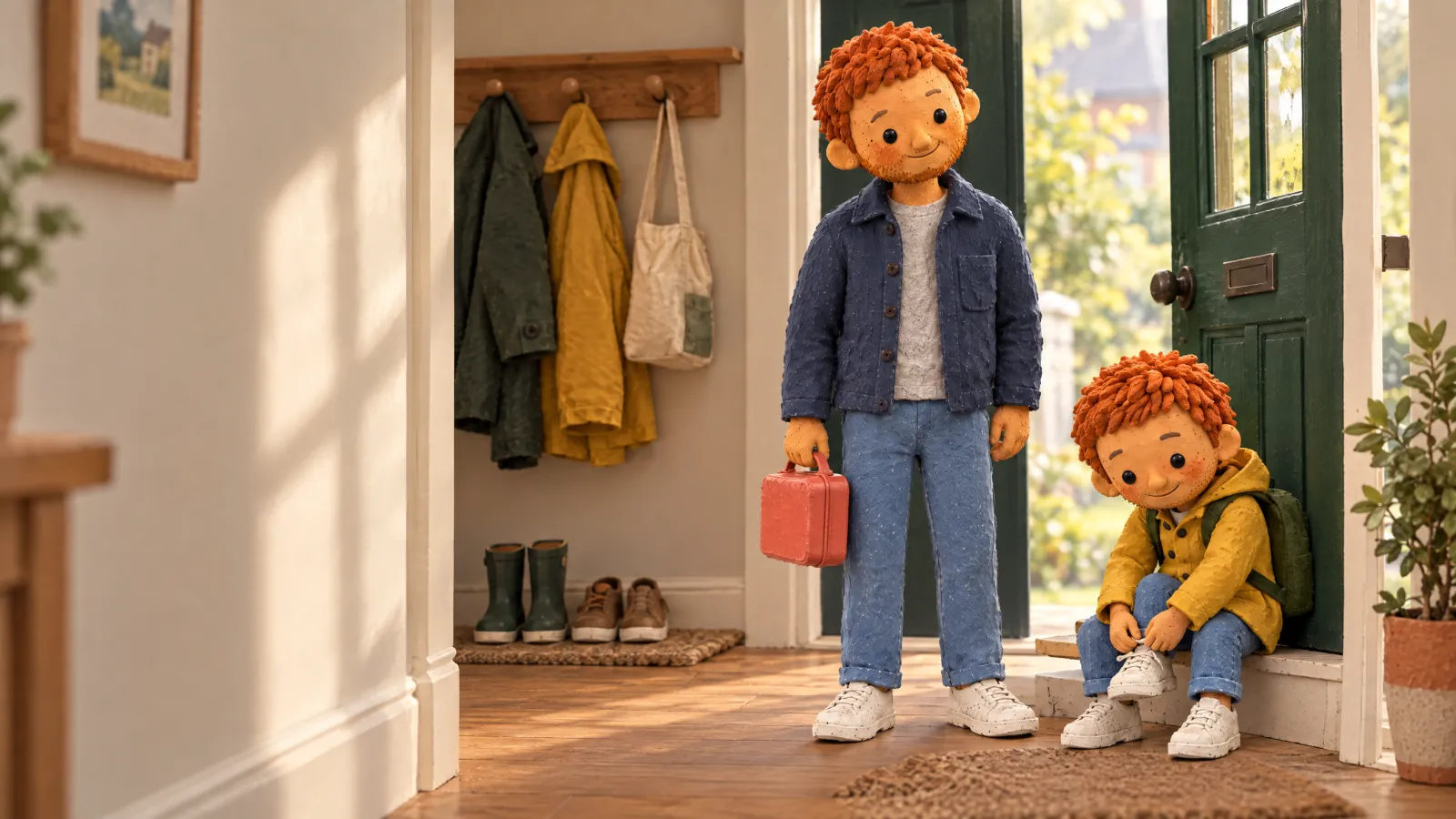
A good morning routine for kids is short, always in the same order, and does the hard part the night before. For most school-age kids that means five to seven steps: wake up, get dressed, breakfast, teeth, bag, shoes and coat, out the door. Give it about 50 to 60 minutes, put a time on the slow steps, and let the routine say what comes next so you don't have to.
Why mornings fall apart
When a school morning goes wrong, it's usually not because a child refuses to get ready. More often nobody is sure what comes next, a step takes twice as long as anyone expected, and something that could have been done the night before (a missing shoe, an unsigned form) eats ten minutes at 7:50.
Predictable routines help children know what to expect, which cuts down on friction. Sleep guidance makes the same point: a regular bedtime routine helps young children get ready for sleep (Raising Children Network on bedtime routines). Mornings work the same way when the order stays the same.
The school-morning checklist
This works for most kids from about age four to twelve. Younger kids need more help with each step, and older kids can run it themselves.
- Wake upSame time every school day. Open the curtains.
- Bathroom and get dressedThe clothes were picked out the night before.
- BreakfastSit down, eat, and drink some water.
- Brush teethTwo minutes. It is the easiest step to rush or skip.
- Pack the bagLunch, water bottle, anything for after school. Homework went in last night.
- Shoes and coatKept by the door, always in the same place.
- Out the door
It's tempting to add every good habit to the morning. Making the bed, reading and practicing an instrument are all worth doing, but a seven-step morning that gets done every day beats an eleven-step one that falls apart by Wednesday.
Sample times for a 7:00 wake-up
| Time | Step |
|---|---|
| 7:00 | Wake up |
| 7:05 | Get dressed |
| 7:20 | Breakfast |
| 7:40 | Brush teeth (2 min) |
| 7:45 | Pack the bag |
| 7:50 | Shoes and coat |
| 7:55 | Out the door |
Work backward from when you need to leave. If the bus comes at 8:05, the door step is 7:55, and everything else moves up from there. With school-age kids, plan on about 50 minutes from waking to walking out, as in the timetable above. If mornings always run late, move the wake-up ten minutes earlier before you try anything else.
Do half of it the night before
The most useful thing you can do for the morning happens around 7:30 the evening before. A five-minute check on tomorrow takes pressure off every step:
- Clothes out, socks included.
- Bag packed and by the door, with homework and signed forms inside.
- Lunch made, or at least decided.
- Shoes and coat in their usual spot.
If you build only one new habit, make it this one. Tie it to bedtime or the end of after-school time so it happens without anyone having to remember.
Make the next step visible
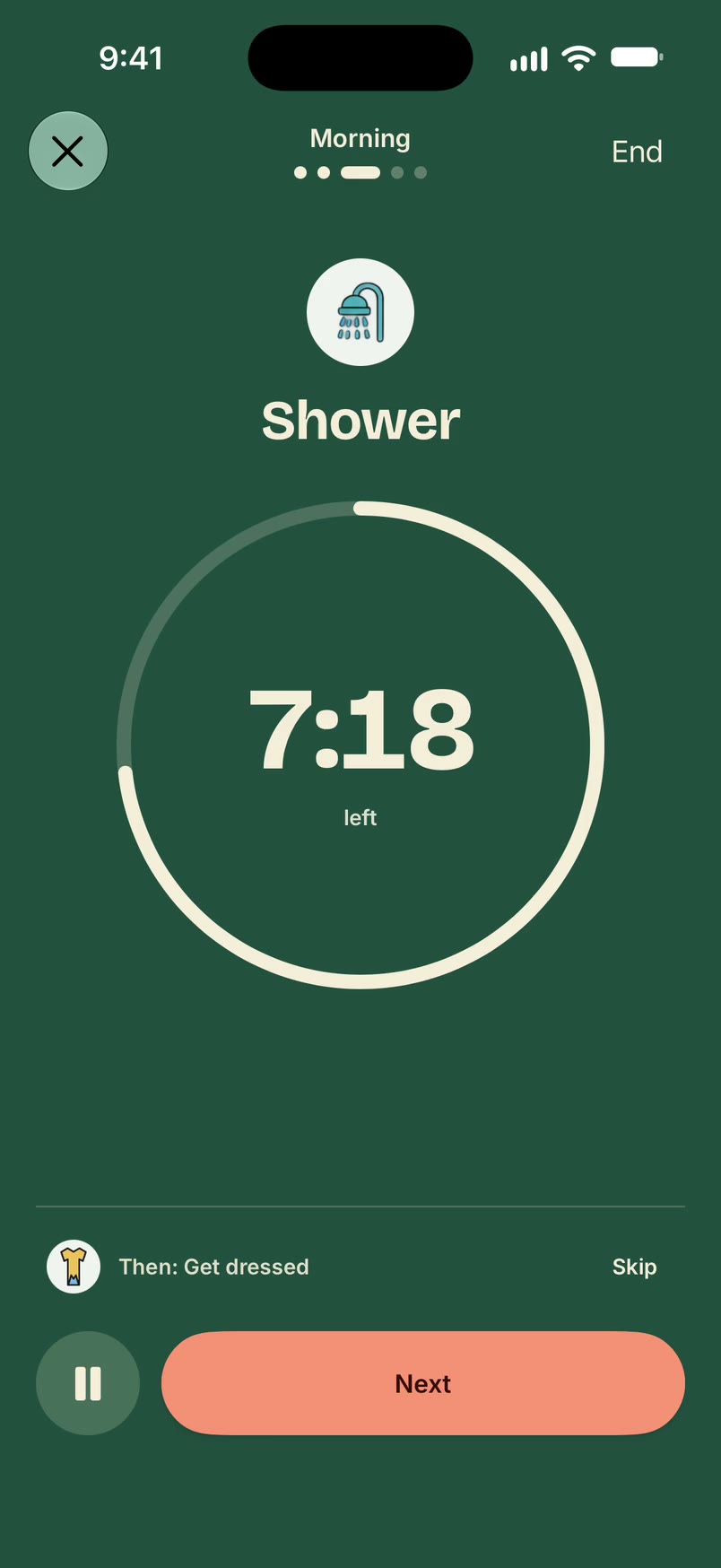
Kids follow a routine more easily when they can see it, whether that's a paper chart on the fridge, picture cards, or an app that shows one step at a time. What matters is that the list lives somewhere other than your head.
- Use your family's words. "Teeth" and "Shoes on" work better than "Complete oral hygiene."
- Show one step clearly, with the next one in view. "Now: breakfast. Next: teeth" is easier to follow than seven items at once.
- Use pictures for kids who can't read yet. A toothbrush, a shirt, a backpack.
A later guide covers visual routine charts for kids in more detail.
Time the steps that drag
Most steps don't need a timer. One or two tend to expand to fill whatever time there is (usually breakfast or getting dressed), while teeth often get done in fifteen seconds.
Put a time on those steps only. A two-minute timer on teeth is a fair rule, and nobody has to nag. A 15-minute limit on breakfast tells everyone when to move on. When the timer says "time's up," you don't have to.
Let them finish it
The routine works best when kids feel it belongs to them. Let them tick off each step, with a magnet, a card, or a tap on Done. Saying "That's the routine done" at the door gives the morning a clear finish.
Try not to praise speed alone.
A calm 55 minutes is better than a rushed 40.
When the morning still goes wrong
- Wake-up is the problem. That usually starts at bedtime. See Raising Children Network on bedtime routines.
- Getting dressed takes forever. Lay out one outfit instead of three, and get dressed before breakfast.
- Screens creep in. If you allow a show, put it after "Shoes and coat" as a reward, or keep screens out of the morning entirely.
- Two kids, one bathroom. Stagger them: one brushes teeth while the other eats.
- You're the bottleneck. Getting up 15 minutes before the kids helps more than most tips.
Give any change a week before you judge it.
Do it in Unmiss
Run the school morning one step at a time
If you'd rather keep the routine on a phone than on the fridge, Unmiss has a ready-made School run routine: wake the kids, breakfast, pack the bags, out the door. Rename the steps to match the checklist above, add teeth with a two-minute timer, and tap Start each morning so your child sees one step at a time. You can also set the routine for school days only, and share it with a co-parent, who hears if it doesn't get kept. See how routines work.

Questions
How long should a kid's morning routine be?
For school-age kids, about 50 to 60 minutes from waking to leaving, with five to seven steps.
What order should a morning routine go in?
Wake up, get dressed, breakfast, brush teeth, pack the bag, shoes and coat, out the door. Getting dressed before breakfast tends to keep the morning moving.
At what age can kids do a morning routine on their own?
It depends on the child. Start with a picture routine you do together, and hand over one step at a time as they show they can do it.
Should kids have screen time before school?
If you allow it, put it last, once they're fully ready, so it rewards finishing instead of interrupting the middle.
More guides

Body doubling for ADHD: how to run a session (with a script)
What body doubling is, how to run a 45-minute session, a partner script, and how light accountability differs from sharing private steps.
How to stop doomscrolling (at night and in the morning)
Stop doomscrolling at night and in the morning: a phone-setup checklist, things to do instead, and short scripts for ADHD, parents, students and work.